The Story of Hannah Jumper and Her Fight for Her Community
Updated: Sep 30
Hannah Jumper did not hold public office. She did not command a militia, own a newspaper, or sit in a town hall seat. Yet in the summer of 1856, in the small fishing town of Rockport, Massachusetts, she became the face of one of the most dramatic acts of community protest in New England history.
She was an older woman by then, often described as being in her seventies. She lived in a town shaped by the sea, by hard work, and by the damage alcohol could do to families already living close to the edge. When she and a group of local women decided they had seen enough, they did something bold, risky, and unforgettable.
They marched through Rockport and destroyed supplies of liquor.
The event became known as Rockport’s women’s raid against rum. At its center was Hannah Jumper, a woman remembered not because she had formal power, but because she acted when formal power seemed too slow, too distant, or too willing to look away.
Rockport was a fishing town under strain
To understand Hannah Jumper’s story, it helps to picture Rockport in the mid-1800s.
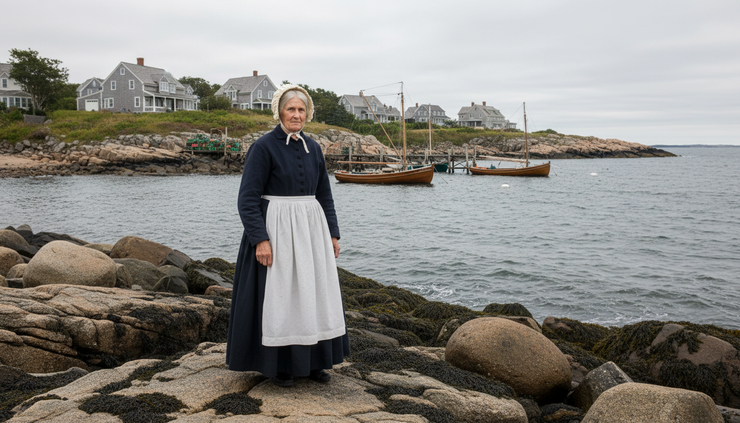
Rockport sat on Cape Ann, surrounded by the Atlantic and tied closely to fishing, quarrying, and coastal trade. Life there could be beautiful, but it was rarely easy. Fishing families dealt with danger at sea, irregular income, injuries, storms, shipwrecks, and long absences. A bad season could shape a household’s future.
Alcohol was woven into many parts of American life at the time. It was sold in shops, served in taverns, offered socially, and consumed by laborers after long days of work. In coastal towns, rum had a long history. For some, it was ordinary recreation. For others, it became a source of debt, conflict, neglect, and violence.
Women often carried the heaviest burden when drinking spiraled. They managed hungry children, stretched household money, and cared for family members harmed by addiction. Yet women in Massachusetts in 1856 did not have the political rights men had. They could not vote. They had limited legal authority. In many homes, they had fewer protections than modern readers would expect.
That imbalance matters. Hannah Jumper and the women who joined her were not simply angry about a private habit. They saw alcohol as a public problem that entered kitchens, bedrooms, church pews, and fishing wharves. It affected whether children ate. It affected whether rent or debts were paid. It affected whether a home felt safe.
The temperance movement had already grown across the United States by the time of the Rockport raid. Churches, reform groups, and local activists argued that liquor sales harmed morality and family life. Some temperance work took the form of speeches and petitions. Some relied on pledges to abstain from alcohol.
Rockport’s women chose a more direct path.
Hannah Jumper became a leader without a title
Hannah Jumper was not remembered as a wealthy reformer or a polished public speaker. The power of her story comes from her plainness. She was a local woman, known in her community, and old enough to have seen years of suffering tied to alcohol.
Accounts of her life often describe her as determined, practical, and deeply committed to moral reform. Whether every detail passed down about her is exact is hard to know, as stories from local history can grow with time. What remains steady is the central fact: Hannah Jumper helped lead a group of women who confronted Rockport’s liquor trade head-on.
Her age also matters. An elderly woman leading a public protest carried symbolic force. She did not fit the image of a reckless young agitator. She stood as a motherly, grandmotherly figure, someone speaking from long experience. That gave her action a kind of moral weight.
Women’s leadership in the 19th century often had to move through acceptable channels, especially religion, charity, and home life. A woman could speak publicly if she framed her cause as protecting families, children, and Christian morals. Temperance became one of the major arenas where women learned to organize, raise money, circulate petitions, and challenge men in public life.
Hannah Jumper’s protest grew out of that world. She and the women around her did not have the ballot. They did have networks, shared grievances, and a strong sense that the town’s well-being was at stake.
The march through town changed Rockport’s memory
The most famous moment in Hannah Jumper’s story came on July 8, 1856, when a group of women gathered in Rockport and moved through town to destroy liquor.
Local tradition often describes them as carrying hatchets or similar tools. They searched places where alcohol was stored or sold, broke open casks, and poured liquor into the streets. The number of women involved is often given as around 200, though historical accounts can vary. What matters is clear: this was not one person acting alone. It was a collective action by women who believed the liquor trade threatened their community.
Try to imagine the scene.
The sound of footsteps on dirt roads. Doors opening. Neighbors watching from windows. The smell of spilled rum. The shock of women, many of them wives and mothers, taking physical action in public. The protest would have been impossible to ignore.

To modern eyes, property destruction raises hard questions. Even when the cause is sympathetic, breaking into stores or destroying goods is not a small thing. The story of Hannah Jumper should not be flattened into a simple celebration of smashing barrels. It is more interesting than that.
The women’s raid shows what can happen when people feel the normal channels of change have failed them. It also shows how limited those channels were for women at the time. The same act that looked unlawful to shopkeepers may have looked like self-defense to families living with the damage caused by alcohol abuse.
Rockport did not forget what happened. The raid became part of local identity, retold as a turning point in the town’s relationship with liquor. For generations, Rockport was known for strict limits on alcohol sales. The town’s later “dry” reputation did not rest on Hannah Jumper alone, but her protest became the story people returned to when explaining why Rockport was different..


Comments